Prayer for sick person in islamic way: essential, practical guide
prayer for sick person in islamic way
Whether you are comforting a loved one, visiting a neighbour in hospital, or seeking solace yourself, learning the prayer for sick person in islamic way offers a compassionate, faith-rooted approach to care. In Islam, supplication (du‘a), remembrance (dhikr), and pastoral etiquette (adab) come together to ease suffering, lift the spirit, and ask Allah for healing. This guide explains what to say, how to say it, and how to combine spiritual support with responsible health care for a balanced path to wellbeing.
Below you will find essential duas from the Qur’an and Sunnah, a step-by-step method for offering a prayer for sick person in islamic way at home or in hospital, etiquette for visiting the ill, common mistakes to avoid, and answers to frequent questions. The aim is to help you feel confident, sincere, and considerate in these tender moments.
What is prayer for sick person in islamic way?
In essence, a prayer for sick person in islamic way is a heartfelt supplication to Allah asking for relief, cure, and mercy for someone unwell. While Muslims may perform formal ritual prayers (Salah) as usual, this support often centres on du‘a (personal supplication), reciting Qur’anic verses for healing (ruqyah), remembering Allah through dhikr, giving charity on behalf of the patient, and following prophetic etiquette when visiting the sick (ʿiyadah).
This spiritual care is not a replacement for medical treatment. Rather, it complements it. Islam encourages believers to seek remedies while relying upon Allah as the ultimate Healer (Ash-Shafi). A well-rounded prayer for sick person in islamic way therefore weaves together trust in God, kind presence, and practical care.


Foundations from the Qur’an and the Sunnah for a prayer for sick person in islamic way
The Qur’an describes itself as guidance and healing for believers. A commonly cited verse for healing is: “We send down the Qur’an as healing and mercy for the believers” (Qur’an 17:82). You can read and reflect on this verse here: Qur’an 17:82 with translation. Many Muslims recite Al-Fatihah, Ayat al-Kursi (2:255), and the last two chapters (Al-Falaq and An-Nas) as part of healing supplications.
The Prophet Muhammad (peace be upon him) frequently visited the sick, comforted them, and made specific duas for their recovery. He advised moderation, hope, and gentle presence. Collections of hadith preserve the wordings of these supplications, and the etiquettes around them. For an accessible overview, see the Sahih al-Bukhari: Book of Patients, which collects narrations regarding illness, healing, and visiting the sick.
Core duas for the ill: prayer for sick person in islamic way
Here are some established supplications you can use in a prayer for sick person in islamic way. You may recite them for yourself or on behalf of someone else. If reciting for another person, you can adapt the pronouns (e.g., “him/her”). Pronunciations vary; sincerity matters most.
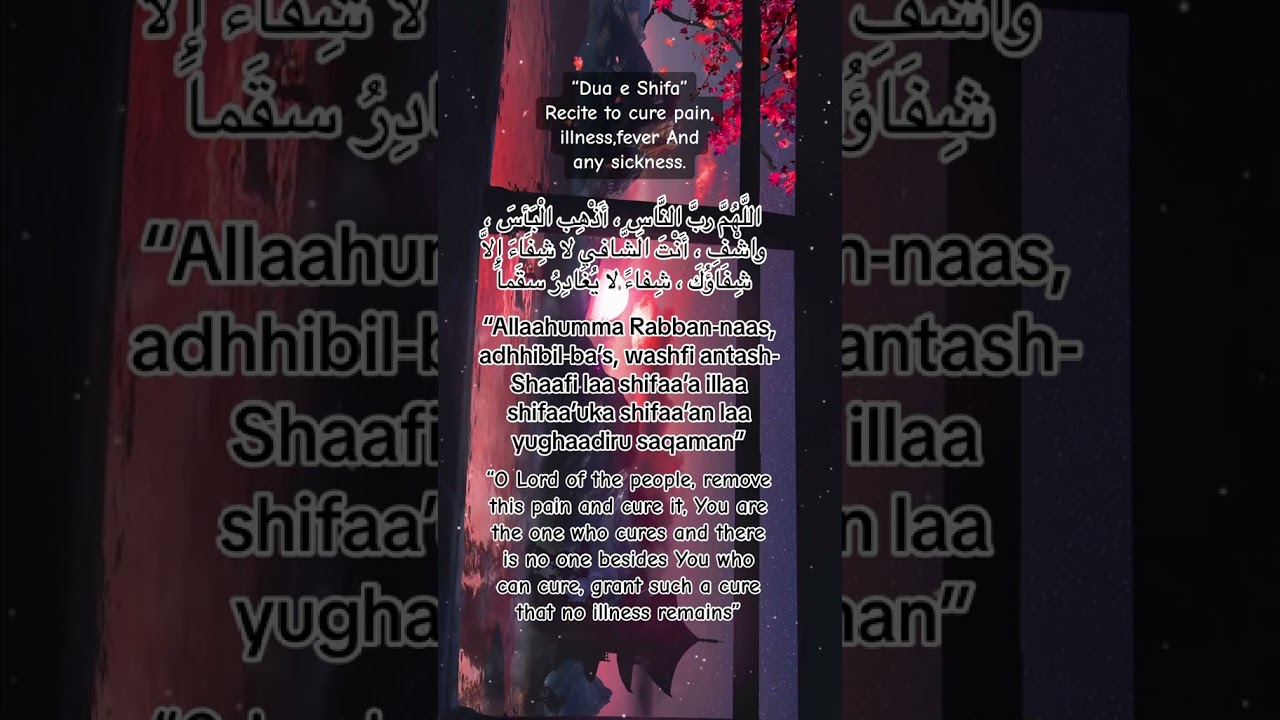
“O Lord of the people, remove the harm…” (Ruqyah for healing)
Transliteration: Adhhib al-ba’sa, Rabb an-nas, ishfi anta ash-Shafi, la shifa’a illa shifa’uka, shifa’an la yughadiru saqaman.
Meaning: Remove the affliction, Lord of the people. Grant healing, for You are the Healer. There is no healing except Your healing, a healing that leaves no illness behind.
When to use: This is a central line to include whenever you offer a prayer for sick person in islamic way. It is gentle, comprehensive, and can be repeated several times with calm focus.
“I ask Allah the Magnificent…” (Seven times dua)
Transliteration: As’alullaha al-ʿAzim Rabb al-ʿArsh al-ʿAzim an yashfiyak(a).
Meaning: I ask Allah, the Magnificent, Lord of the Mighty Throne, to cure you.
When to use: Say up to seven times during a prayer for sick person in islamic way. The repetition helps anchor the heart in trust and perseverance.
“No harm, a purification if Allah wills”
Transliteration: La ba’sa, tahurun in shaa’ Allah.
Meaning: No harm; a purification, if Allah wills.
When to use: A brief, uplifting phrase for bedside encouragement. It expresses hope that the illness will purify sins and raise one’s rank.
“In the Name of Allah, I recite upon you…”
Transliteration: Bismillahi urqik(a), min kulli shay’in yu’dhik(a), wa min sharri kulli nafsin aw ʿaynin hasid, Allahu yashfik(a), bismillahi urqik(a).
Meaning: In the Name of Allah, I recite over you; from everything that harms you; from the evil of every soul and envious eye; may Allah cure you; in the Name of Allah, I recite over you.
When to use: This is a classic ruqyah formula for protection and healing. It can be used during any prayer for sick person in islamic way, with calm, respectful delivery.
Helpful Qur’anic passages for ruqyah
- Al-Fatihah (the Opening): Many Muslims recite it as a healing chapter.
- Ayat al-Kursi (2:255) and the last two chapters (Al-Falaq and An-Nas): for protection and relief.
- Selected verses like 17:82 emphasise the Qur’an’s healing role (read Qur’an 17:82).
Step-by-step guide: performing a prayer for sick person in islamic way
Use the following practical sequence when offering a prayer for sick person in islamic way at home, in hospital, or during a brief visit. Adapt to circumstances with sensitivity and respect for hospital policies.
- Prepare inwardly: Renew your intention (niyyah) purely for Allah’s sake. If possible, be in a state of wudu (ablution). Keep your tone warm and your presence unhurried.
- Seek permission: If visiting, ask the patient (or their guardian) whether they are comfortable with recitation or prayer. For non-mahram patients, maintain appropriate boundaries.
- Open with praise: Quietly praise Allah and send salutations upon the Prophet (peace be upon him). A simple “Alhamdulillah” and “Allahumma salli ʿala Muhammad” sets a reverent tone.
- Recite Qur’anic verses: Begin with Al-Fatihah, followed by Ayat al-Kursi and the Muʿawwidhatayn (Al-Falaq, An-Nas). Recite steadily, understanding that this forms a core part of a prayer for sick person in islamic way.
- Make the duas above: Include “Adhhib al-ba’sa…” and “As’alullaha al-ʿAzim…”. Repeat with gentle focus, trusting Allah’s mercy.
- Ruqyah method (optional): Some people lightly cup their hands, recite, and blow softly into the hands, then wipe over the body (or the area of pain if appropriate). Always ensure consent and respect modesty.
- Raise your hands for personal du‘a: Ask for healing, patience, forgiveness, and ease. Mention the person by name. This personalises a prayer for sick person in islamic way and offers deep emotional support.
- Balance with practical help: Check if the patient needs water, a cushion adjusted, or a message sent to a relative. Pairing du‘a with kindness is the Prophetic way.
- Close with hope: End by entrusting the matter to Allah, asking Him to make the illness a means of purification, and to grant a speedy recovery.
Etiquette of visiting the sick (ʿiyadah) within a prayer for sick person in islamic way
- Seek a good time to visit: Keep visits timely and considerate. Some hospitals have visiting hour policies—see guidance like NHS advice on visiting someone in hospital and follow staff instructions.
- Be brief if needed: Don’t tire the patient. A short, sincere prayer for sick person in islamic way can be more helpful than a long stay.
- Offer hope, not false promises: Encourage the patient to remain hopeful in Allah; avoid minimising their experience or making unrealistic claims.
- Guard privacy: Keep the person’s condition confidential unless they wish otherwise.
- Respect boundaries: Observe gender etiquette, personal space, and cultural sensitivities.
- Give appropriate gifts: Flowers may be restricted; a simple card, a small fruit basket, or arranging a meal for the family can lift spirits.
When and how to use ruqyah in a prayer for sick person in islamic way
Ruqyah is the practice of reciting specific Qur’anic verses and prophetic duas for protection and healing. In a prayer for sick person in islamic way, ruqyah is performed by reciting the relevant texts with sincere reliance on Allah, sometimes blowing lightly and wiping over oneself or the patient (with consent). Keep it simple and avoid superstition—no talismans, no unknown charms, and nothing that contradicts Tawhid (pure monotheism). For background reading, see an overview of the concept here: general introduction to ruqyah.
Key points:
- Use clear, authentic duas and Qur’anic verses.
- Rely on Allah alone; ruqyah is a means, not an independent power.
- Do not charge money or make it a spectacle. Discretion and humility are best.
- Combine ruqyah with medical advice and treatment plans.
Balancing prayer and medicine
Islam strongly encourages seeking medical treatment. The Prophet (peace be upon him) taught that “Allah has not sent down a disease except that He has also sent down its cure.” A wise prayer for sick person in islamic way therefore blends duas, ruqyah, and remembrance with evidence-based medical care and healthy routines (nutrition, rest, medications as prescribed). During hospital stays, be mindful of staff routines and infection control. For practical visiting considerations, see NHS guidance on hospital visits.
Common mistakes to avoid in a prayer for sick person in islamic way
- Replacing treatment with prayer: Du‘a complements, it does not replace, medical advice.
- Overcomplicating ruqyah: Avoid unverified rituals. Stick to authentic verses and supplications.
- Invading privacy: Do not share updates without permission; avoid pressing for personal details.
- Speaking harshly or fatalistically: A prayer for sick person in islamic way should be wrapped in hope and compassion, not fear or blame.
- Lengthy, exhausting visits: Prioritise the patient’s comfort over lengthy recitations or anecdotes.
Examples and scripts you can adapt
You can personalise a prayer for sick person in islamic way depending on the situation. Below are short, adaptable scripts.
Bedside (adult)
“Alhamdulillah. May Allah make this a purification for you. Adhhib al-ba’sa, Rabb an-nas, ishfi anta ash-Shafi, la shifa’a illa shifa’uka, shifa’an la yughadiru saqaman. O Allah, ease their pain, grant them patience, and bless the hands caring for them.”
Parent with a child
“Bismillahi urqik. O Allah, Lord of the people, protect and heal this child. Replace discomfort with calm, and fear with trust. As’alullaha al-ʿAzim Rabb al-ʿArsh al-ʿAzim an yashfiyah(a).”
Text message or card
“Assalamu ʿalaykum. I’m keeping you in my duas. La ba’sa, tahurun in shaa’ Allah. May Allah grant you a swift recovery and make this a source of mercy.”
For yourself
“O Allah, You are Ash-Shafi. Adhhib al-ba’sa, Rabb an-nas, ishfi anta ash-Shafi. I rely upon You while I follow the treatment recommended for me. Grant me resilience and gratitude.”
Creating a supportive environment around a prayer for sick person in islamic way
- Establish calm: Reduce noise, switch off distractions, and sit at eye level with the patient.
- Invite participation: If the patient has energy, let them recite along or say “Amin”.
- Encourage small acts of worship: Short dhikr (SubhanAllah, Alhamdulillah, La ilaha illa Allah), brief Qur’an listening, or a whispered du‘a—whatever the person can manage.
- Offer practical support: Meals, childcare, transport to appointments, or managing paperwork. This turns a prayer for sick person in islamic way into a lived act of service.
- Consider charity (sadaqah): Giving on behalf of the ill is a time-honoured way to seek Allah’s mercy and relief for them.
Timing and frequency: when to make a prayer for sick person in islamic way
- Anytime: Allah hears at all times. Consistency is more valuable than volume.
- After obligatory prayers: Moments after Salah are times of focus and humility.
- In the last third of the night: A special time for acceptance; even a short du‘a helps.
- On Fridays and between Adhan and Iqamah: Traditionally recommended times for supplication.
Bringing community together around a prayer for sick person in islamic way
When appropriate and with the family’s consent, invite relatives and close friends to make du‘a collectively. A brief group supplication—at home or online—can comfort the patient and caregivers alike. Keep it simple, avoid crowding, and ensure it serves the patient’s wellbeing first.
Imams and chaplains can provide additional support, especially during longer hospital stays or complex diagnoses. Many hospitals in the UK can arrange access to Muslim chaplaincy upon request.
Embedding authentic sources into your practice
To build confidence in your prayer for sick person in islamic way, study key passages and reliable hadith. In addition to the Book of Patients, reputable hadith collections and educational sites offer accessible translations and explanations. As a starting point, the Sahih al-Bukhari: Book of Patients provides context for the Prophet’s guidance on visiting and comforting the ill, while
